The NBA and EuroLeague keep showing that they can carry on without one another. The scale of the performance suggests how badly each needs what the other already owns.
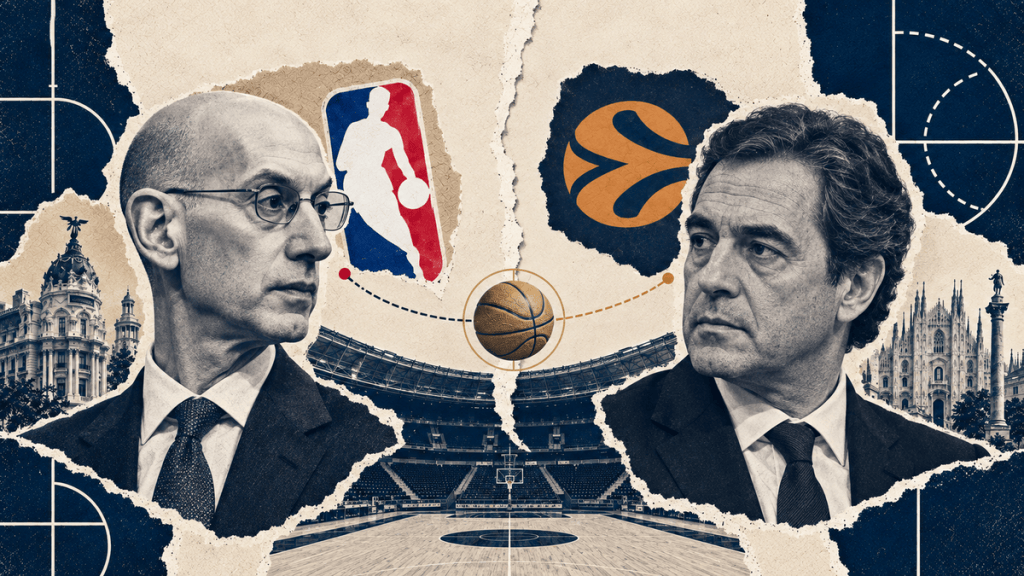
Adam Silver and Chus Bueno are now saying much the same thing, but with a carefully chosen difference in emphasis.
Silver wants the NBA and EuroLeague to present a united front. Bueno agrees that European basketball would be stronger together, while making clear that EuroLeague is prepared to compete if the right agreement cannot be reached. Neither man sounds especially worried about going alone. Yet each is suggesting that they might ultimately be better together.
That is why their words are beginning to sound like a negotiation conducted in public.
The NBA is displaying the investment, cities and regulatory support it can assemble without EuroLeague. EuroLeague is displaying the clubs, long-term licences and expansion capital it can protect without the NBA. Both alternatives are credible. Both would also be expensive, disruptive and weaker than the competition they could construct together.
The language is diplomatic. Underneath it sits a harder argument about ownership, control and price. European basketball may be moving towards one competition, but first the NBA and EuroLeague must decide what each side receives for bringing the assets the other cannot reproduce.
The performance of walking away
Silver’s latest intervention sounded conciliatory. Talks were progressing, he said, and everyone would be better off if the NBA and EuroLeague joined forces.
Bueno’s response was more guarded. On 17 September, he supplied an important limit to the idea that negotiations are already approaching a deal: EuroLeague had not received a formal offer or a concrete proposal explaining what cooperation would look like. The organisations have signed non-disclosure agreements, but any eventual offer must still be evaluated and presented to the club owners.
The distinction matters. The conversation has progressed far enough for private contact and confidentiality, but not far enough for a price, equity share or operating structure to be put before EuroLeague’s owners. The two sides are negotiating the conditions under which a concrete negotiation could begin.
On the surface, both positions still amount to the same thing: we would prefer to work together, but we are ready to carry on without you.
The scale of investment gathering behind both projects makes that claim credible. The NBA has received final bids from more than 20 groups, with prospective franchises attracting valuations of between $500 million and $1 billion. EuroLeague, meanwhile, says it has received binding proposals worth hundreds of millions of euros.
That money is not only funding two possible futures for European basketball. It is strengthening each side’s position in deciding whether those futures eventually become one.
The NBA wants EuroLeague to see that it can attract investors, enter major cities and launch without the existing competition. EuroLeague wants the NBA to see that its clubs and investors are prepared to remain together rather than accept whatever terms are offered.
Neither side benefits from admitting how much it needs the other. The NBA has the money and commercial reach, but a new competition without Europe’s most meaningful clubs could still feel artificial. EuroLeague has the clubs, rivalries and inherited support, but would have to compete against an unprecedented arrival of capital.
Both can walk away. The question is whether either genuinely wants to discover what walking away would cost.
The legal threat has disappeared
EuroLeague’s decision to rule out legal action matters because it clarifies where the struggle is now taking place.
In March, Bueno described litigation as totally off the table. His argument was commercial rather than territorial. If the NBA brings billions of dollars into European basketball, common sense should dictate that the investment increases the value of the whole sport rather than destroying value through duplicated competitions.
That does not make the prospect of competition a bluff. The bids, expansion plans and long-term commitments have consequences. It does, however, make them part of the bargaining process. The contest is moving away from an attempt to prevent NBA Europe and towards a discussion about how EuroLeague clubs, owners and intellectual property might fit inside it.
The public disagreement is about whether each organisation can survive alone. The private negotiation, once concrete terms arrive, will concern how much control each must surrender to become stronger together.
What each side really owns
This is often presented as a choice between NBA money and European tradition. That description is too simple. Each organisation controls a collection of assets that the other would find difficult, and in some cases impossible, to build from scratch.
The NBA brings capital, global distribution, commercial systems, relationships with international sponsors and the ability to turn franchises into valuable investment properties. It can open conversations about modern arenas in cities where elite basketball has failed to match the size of the market. It also brings a brand recognised by casual sports fans who may never have watched a EuroLeague game.
EuroLeague brings the part that cannot simply be commissioned. Real Madrid, Barcelona, Olympiacos, Panathinaikos, Fenerbahce, Maccabi Tel Aviv, Partizan and Red Star already mean something. Their supporters did not choose them after a marketing launch. The rivalries, memories and local identities have accumulated across generations.
The NBA can help finance a team in London. It cannot immediately give that team the emotional weight of Olympiacos against Panathinaikos. EuroLeague can fill arenas in Athens, Belgrade and Istanbul with an atmosphere a new franchise would struggle to manufacture. It cannot easily summon the capital required to build modern venues, enter several underdeveloped markets and distribute the competition globally.
FIBA supplies a third part of the exchange: regulatory legitimacy, relationships with national federations and a merit-based route connected to domestic basketball. The proposed NBA model needs that pathway if it is to claim that it belongs to the European system rather than sitting above it.
They may dislike the word desperate, but both sides are strategically dependent. The NBA needs a competition that feels European. EuroLeague needs investment capable of turning its cultural strength into a larger commercial business.

The problem of 12 seats and 13 owners
The case for one competition becomes easy to make in a conference room. It becomes much harder when someone begins assigning the permanent places.
The current NBA model contains 12 permanent franchises. EuroLeague already has 13 shareholder clubs and intends to create additional permanent franchises of its own. Even before London, Paris, Rome and other strategically important cities are considered, the numbers need to add up.
A combined competition cannot give every EuroLeague shareholder a permanent NBA Europe place while preserving the NBA’s proposed structure. Either the number of franchises must change, some historic clubs must accept qualification rather than permanence, or a division must be created between ownership rights and guaranteed participation.
That may turn the negotiation inside out. The most difficult argument may eventually be among EuroLeague’s own clubs. Is a place earned through decades of contribution, current sporting performance, the size of a media market or the amount an investor is willing to pay? How much equity should a club receive for helping to build EuroLeague, compared with a new owner paying hundreds of millions to enter NBA Europe?
The answers affect far more than prestige. Permanent membership creates predictable revenue and an asset that can be sold. Qualification preserves sporting openness, but it exposes owners to the financial consequences of missing the competition. Every additional permanent place protects one investor while reducing scarcity for the rest.
What a combined league might keep
A settlement would not necessarily make European basketball look like a smaller version of the NBA. The value EuroLeague contributes depends on preserving the characteristics that make its clubs different.
Historic names, colours and rivalries would almost certainly survive. Domestic-league participation is also likely to remain, along with European or FIBA rules and a qualification route for clubs outside the permanent group. FIBA’s involvement makes calendar coordination and access through sporting merit central to the proposal.
The larger changes would happen behind the product. Media and commercial rights could be sold more centrally. A salary system and stronger cost controls could make spending more predictable. Revenue sharing, franchise equity and minimum standards for arenas, production and hospitality would become more formal. The NBA would take a major role in global streaming, sponsorship and marketing.
There are several possible legal structures. EuroLeague could be absorbed, with selected clubs receiving permanent franchises and its shareholders receiving equity or compensation. The organisations could create a jointly owned competition, retaining a meaningful EuroLeague role while using the NBA’s commercial machinery. A looser alliance could leave both competitions in place while coordinating rights, calendars and an interleague event.
The joint venture looks like the most natural destination because it recognises that both sides are contributing irreplaceable assets. Full absorption would be commercially clean but politically difficult. A loose alliance would be easier to announce but would leave much of the fragmentation intact.
Silver’s warning that the initial product could differ from the eventual league gives the parties room to move in stages. The first season could establish the competition while negotiations over further club integration, ownership and arenas continue. What it should not be mistaken for is a finished structure.
What the investors thought they were buying
The flood of investment creates another question. What happens to the people who have already committed money to EuroLeague clubs, EuroLeague expansion or prospective NBA Europe franchises if the two projects are combined?
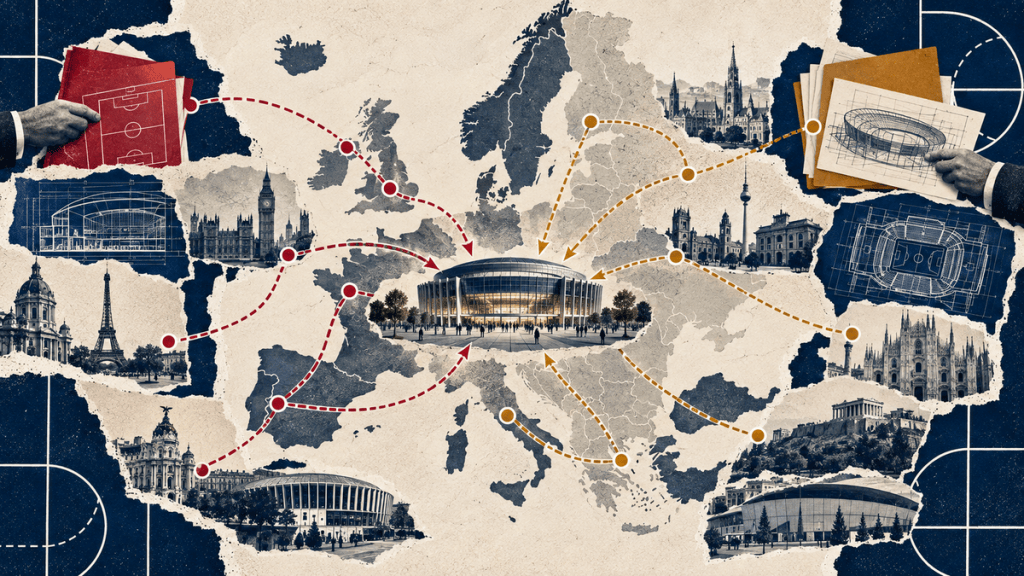
No serious investor entering this process in 2026 could reasonably claim to have been surprised by the possibility of either competition or consolidation. The NBA publicly began exploring a European league in March 2025. Possible cooperation structures were being discussed openly by early 2026. The NBA, FIBA and EuroLeague met together in April. Final NBA franchise bids arrived in June. EuroLeague then advanced an expansion process of its own.
That chronology does not reveal what is written in private agreements, and many bids may depend on conditions that have not been made public. It does show that investors were not buying into a settled league system. They were purchasing a position in a market whose structure was under negotiation.
The figures also represent different things. Existing EuroLeague shareholders have ownership rights, institutional influence and clubs with established support. New EuroLeague applicants are bidding for long-term access to an existing competition. NBA Europe bidders are reportedly offering far larger sums for scarce permanent franchises in a new one. Those commitments cannot simply be compared as if they were identical entry fees.
There is no reliable public evidence that the same outside investment group has formally bid for both an NBA Europe place and a new EuroLeague franchise. The overlap is nevertheless obvious at market level. The bidders are pursuing many of the same cities, clubs, players, arenas, sponsors and viewers. Current EuroLeague teams have also participated in the NBA process.
The rational investment case therefore has to account for several outcomes. One competition may defeat the other. The leagues may remain separate. Or the bids may become claims on ownership and influence in a unified structure. An offer for a franchise can be both an investment proposal and a way to secure a seat in the negotiation that follows.
This is not necessarily a bet that Europe can support two elite competitions. Investors may believe European basketball is undercommercialised: widely played, culturally important and capable of attracting large crowds, yet weak at converting that interest into media, sponsorship, arena and hospitality revenue.
Two rival leagues could turn that opportunity into saturation. They would duplicate teams in major markets, divide audiences and bid against one another for players. A unified competition could instead create scarcity, concentrate media rights and make every permanent place more valuable. The investors may be betting that the fight between two leagues ultimately produces one stronger asset.
The decision hiding behind cooperation
The next announcements may use the language of partnership. The real decision will be visible in the allocation of permanent places, equity and control.
EuroLeague clubs will want recognition for the competition they have already built. NBA investors will want the scarcity and governance promised by a franchise model. FIBA will want a genuine connection to domestic basketball and qualification. The NBA will want enough authority to impose the commercial structure that made the investment attractive in the first place.
That is why the current statements sound simultaneously warm and confrontational. Silver can praise unity while continuing preparations for launch. Bueno can welcome billions of new investment while constructing a EuroLeague capable of resisting absorption. Each man is offering cooperation and advertising the cost of refusal.
Europe may finally receive investment on the scale its basketball culture appears to justify. Before it does, the existing clubs and the new bidders must learn whether they invested in separate futures or bought negotiating positions in the same one.
The NBA and EuroLeague can both continue alone. That does not mean either can build the best version of European basketball without the other.


Leave a Reply